Southend United Burger Index: A £7 Naked Burger in Front of 9,985
A precooked, reheated 6oz burger at Roots Hall scores 7.1, on the night Southend drew the National League's biggest crowd of the season and still lost to Boreham Wood.
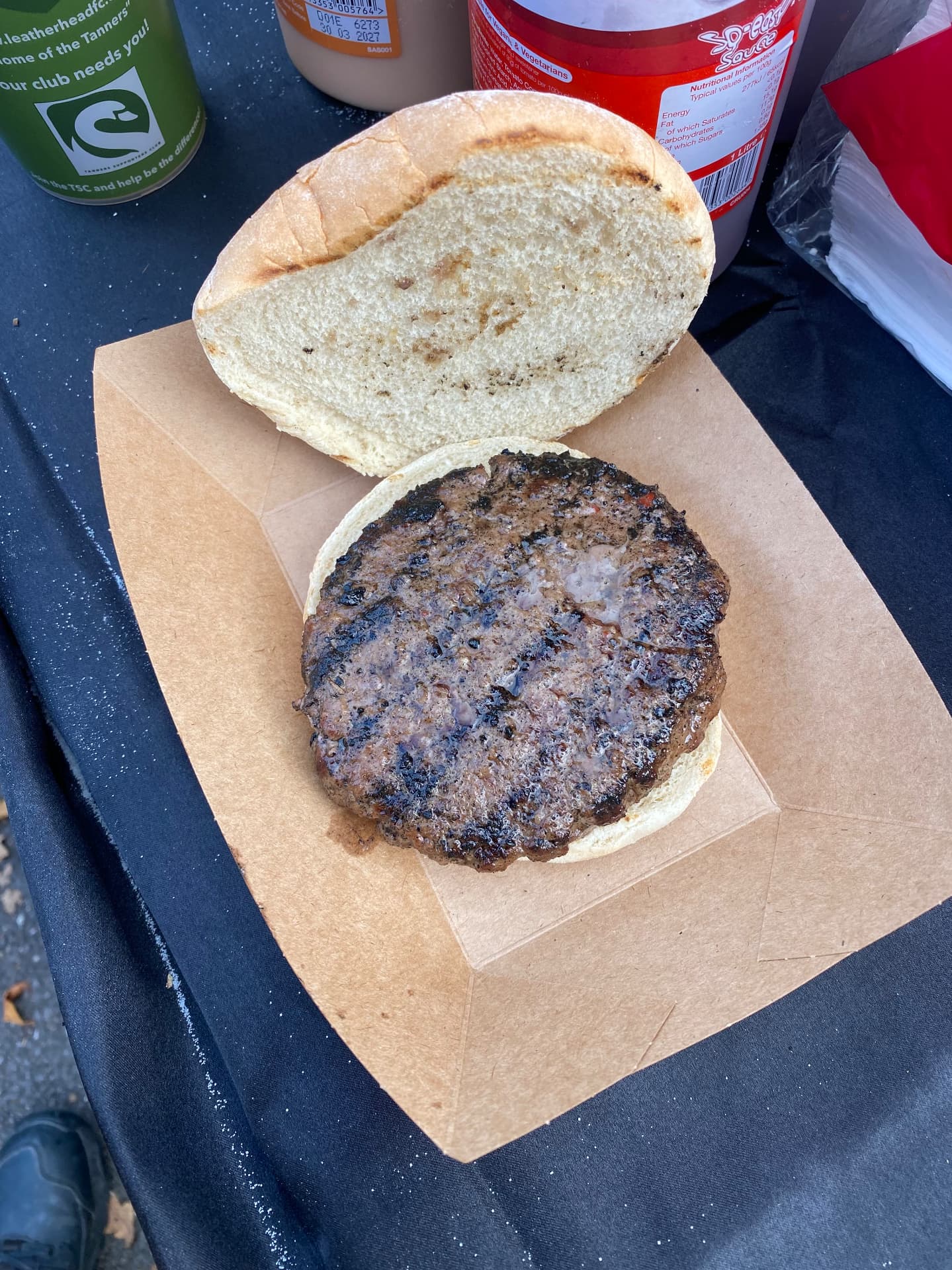
- The burger: a 6oz Naked Burger with onions, £7, rated 7.1. It was precooked, lifted from a holding pot with five others and reheated, and was better than that process deserves.
- The afternoon: £25 admission, £7 burger and a £5 can of Heineken come to £37, a little below Sutton United (£38.40) and a little above Boreham Wood (£35).
- The crowd: 9,985 is the highest National League attendance of 2026–27. Southend's season average of 8,577 is the highest in the division by more than 1,700.
- The money: turnover doubled to £5.1m in the year to July 2025, but £1.7m of that was the Wembley play-off final. The club lost £1.34m and its owners have now put £11.5m into the club since October 2023.
- The match: Boreham Wood led 3–0 at half-time and held on 3–2 to stay unbeaten and 13 points clear at the top.
A £7 Naked Burger from the Eat Street van at Roots Hall scores 7.1 on The Pyramid Burger Index, on a Friday night when £25 bought admission, the only lager on sale was a £5 can of Heineken, and Southend United drew the biggest National League crowd of the season, 9,985, only to lose 3–2 to the league leaders, Boreham Wood.
Disclosure: Boreham Wood FC is a commercial partner of The Pyramid. The relationship has no bearing on this entry, which was bought and paid for in the usual way.
The index entry
| Ground | Roots Hall, Southend-on-Sea |
| Fixture | Southend United 2–3 Boreham Wood |
| Date | Friday 20 November 2026, 7.45pm |
| Competition | Enterprise National League |
| Item | Naked Burger (6oz patty, onions), Eat Street van |
| Price | £7 |
| Admission | £25 |
| Lager | Heineken 440ml can, £5 (no draught) |
| Rating | 7.1 |
The burger
Food at Roots Hall comes from vans rather than club-run kiosks, and the one we queued at traded as Eat Street. The menu runs from the £7 Naked Burger through a Cheese Please at £8 and a Blues Burger at £9 to The Gaffer at £10, with hot dogs, chicken and loaded fries in the £7 to £10 range and a veggie option at around £7. A food hygiene certificate was on display, as was a thank-you notice from Farleigh Hospice, which is a small thing but tells you something about who is behind the counter.
The burger itself was precooked. We watched it come out of a liquid holding pot along with five others and go back on the griddle to be reheated, which is how a van feeds a long queue in the minutes before kick-off and at half-time, and is rarely how a good burger is made. It arrived in a brioche bun with a decent heap of griddled onions. The menu board promised lettuce, and none of it made it into ours. It was, to be fair, better than it should have been given the method, with the patty still holding some moisture and the onions doing much of the work. But a reheated burger has a ceiling, and this one found it at 7.1.
That puts it level with the salami roll at Mestre and a fraction behind Leyton Orient and Hampton (both 7.2) and Boreham Wood's own home burger (7.3). It is comfortably ahead of Sutton United's 6.1 and Dagenham's 4.8, but well short of the 8s posted at Fisher, Tottenham and Twickenham. Kingstonian's 9.2 remains the high-water mark.
The price list read as a financial document
The bar at Roots Hall sells cans and bottles only. There is no draught, so the only lager above the standard tier was a 440ml can of Heineken at £5, poured into a plastic cup. Foster's and John Smith's were £4.50, Guinness £5 and Guinness 0.0 £4.50. Inch's cider was £5, and £4 for the alcohol-free version. Every spirit and mixer on the board, from Gordon's and tonic to Captain Morgan and cola, was £5, with wine at £5.50 and sparkling at £6.
The list reads as one built for simplicity. Cans need no lines and can be served quickly to a crowd approaching 10,000, and a flat £5 across the premium beer, cider and spirits keeps the arithmetic easy at the hatch, whatever the thinking behind it. Price comparisons with other grounds need a little care, because a 440ml can is about four-fifths of a pint. On a like-for-like basis the £5 Heineken works out at roughly £6.45 a pint, slightly above the £6 Moretti on draught at Boreham Wood and Hampton.
Soft drinks were £2.70 for Coke, Diet Coke, Fanta, Sprite and Oasis, which is 60% of the price of a standard beer. Simply Fruit at £1.70 and water at £2 were the cheapest items on the list. A handwritten board nearby had one price amended from £5.80 to £6, a small sign that costs have been moving.
The club's own figures give a sense of what all this is worth. Southend's financial update puts matchday food and beverage income at £350,000 in 2024/25, up from £220,000 the year before. Spread across the season's league crowds, that is a little over £2 a head. Whether that figure is the club's share of what the vans take, or something closer to gross sales, the update does not say. Either way, food and drink is a modest line next to £1.48m from match tickets.
Cost of the afternoon
Admission of £25 bought on the day (£23 in advance), a £7 burger and a £5 can come to £37. That is £1.40 less than our Sutton United visit and £2 more than at Boreham Wood, and it sits in the middle of the National League entries we have filed. Southend's adult price is towards the top of the division, which is what a club drawing more than three times the league average crowd can charge. Season ticket prices were frozen for 2026–27 to mark the club's 120th year.
Southend United's finances
Southend United's latest accounts, for the year to 31 July 2025, were filed at Companies House on 30 April 2026, and the club published a plain-English financial update alongside them. Turnover doubled to £5.10m from £2.52m, but the update is clear about why. The play-off final at Wembley, where Southend lost to Oldham Athletic, brought in £1.7m of ticket revenue, against about £1.4m of Wembley-related ticketing costs. Strip that out and underlying revenue was about £3.4m, still up by around a third on the year before.
The main lines were match tickets (£1.48m), commercial sponsorship (£0.71m), food and drink (£0.35m) and hospitality (£0.21m). Cost of sales, driven mainly by the playing squad and the cost of staging matches, came to £5.18m, more than turnover, so the club made a gross loss before any overheads. After administrative expenses of £1.27m, which the club says were flattered by a one-off £522,000 debt write-back, the loss before tax was £1.34m, half the previous year's £2.65m. Interest and penalties fell from £155,000 to £2,000, which shows how much the club's financing costs have eased since the old debts were cleared.
The balance sheet still shows net liabilities of £6.97m, most of it money owed to the parent company, COSU FC Limited, which had risen to £5.58m from £2.83m. Cash at the year end was £760,000. The update says the wider group has no external debt, and forecasts a loss of about £2.4m for 2025/26, a year without Wembley income. The strategic report is candid that the club "remains reliant" on COSU's continued support.
Who owns Southend United
The club is owned by COSU FC Limited, the Custodians of Southend United, the consortium that completed the takeover from Ron Martin in July 2024. Its directors are Justin Rees, the club's chairman, and Jason Brown. Brown is the only person registered at Companies House as having significant control of COSU, with between 25% and 50% of its shares, so no single individual is registered as controlling more than half.
By the club's account, COSU's owners had put £11.5m into the club between October 2023 and April 2026. That covers £5.85m of operating losses, £3m to clear legacy debts, £1.92m on capital projects and £630,000 on due diligence and legal fees. The largest capital item is £1.3m on new training ground facilities. The training ground itself is owned outright by the group through a sister company, POSU FC Limited, valued at about £3m with no debt against it.
The ground
Roots Hall, with a capacity of 12,392, is the largest football ground in Essex, and on Friday it was more than 80% full. Across the season so far Southend have filled about two-thirds of it, the highest fill rate in the National League.
The freehold sits outside the football club. Companies House shows it held by Roots Hall Limited, a separate company. The club's own financial update says it holds a 125-year lease on the ground at a nominal rent, with a contractual route to acquiring the freehold once planning conditions at Fossetts Farm, the site once earmarked for a new stadium, are met. The owners have committed to staying at Roots Hall and redeveloping it, and have spent around £550,000 on the ground so far, including LED floodlights, work on the north-west corner and consultants for the redevelopment.
The match
Boreham Wood arrived unbeaten and top, and by half-time it was easy to see why. Oliver Bainbridge scored after 19 minutes, Ben Whitfield after 29 and Zak Brunt after 33. Southend changed things at the break, and Tyreece Simpson, a half-time substitute, pulled one back on 64 minutes before Rico Richards made it 3–2 three minutes later. The pressure that followed was considerable, but Boreham Wood held on.
The result leaves Boreham Wood on 48 points from 18 games, with 15 wins and three draws, 13 points clear at the top. Southend are sixth on 32 points after the weekend's games, in a tightly packed chasing group, and have now lost three of their nine home league games.
If every one of the 9,985 had paid the £25 matchday adult price, the gate would have been just under £250,000. That is a ceiling rather than an estimate: season ticket holders, concessions and advance tickets at £23 mean the real figure would have been some way below it.
Why it matters
Southend are the National League's outlier. They are averaging 8,577 at home this season, more than three times the division average of 2,575 and well clear of Carlisle (6,838), Scunthorpe (4,504) and Hartlepool (4,370). The club's figures show what that support is worth, with match ticket income rising from £1.23m to £1.48m in a year and forecast at £1.73m for 2025/26. They also show its limits. Even with the biggest crowds in the division, the club spends more on its squad and on staging matches than it earns, and the gap is filled by its owners.
The new owners have removed much of the uncertainty that hung over the club for years. Its external debts are gone, the training ground is owned and the club has a long lease on its stadium. What has not changed is the underlying arithmetic. A club can outdraw half of League Two, sell its cans at £5 and its soft drinks at £2.70, and still need a parent company to underwrite a seven-figure loss. Whether the Roots Hall redevelopment can change that is the question that will shape the next few years.
Frequently asked
How much is a burger at Southend United?
The Naked Burger from the Eat Street van at Roots Hall costs £7. Cheeseburgers are £8, and the top burger on the menu, The Gaffer, is £10.
How much does it cost to watch Southend United?
Adult admission was £25 on the day and £23 in advance for the Boreham Wood match in November 2026.
How much is a beer at Roots Hall?
There is no draught beer. A 440ml can of Heineken costs £5, and Foster's and John Smith's are £4.50.
What is the total cost of a matchday at Southend?
Admission, a burger and a can of Heineken come to £37.
What was the result of Southend United v Boreham Wood?
Boreham Wood won 3–2 at Roots Hall on 20 November 2026, in front of 9,985.
What league are Southend United in?
The National League, the fifth tier of English football. They were sixth after the weekend's games.
Who owns Southend United?
COSU FC Limited, whose directors are Justin Rees and Jason Brown, completed the takeover from Ron Martin in July 2024.
Are Southend United profitable?
No. The club lost £1.34m before tax in the year to July 2025, on turnover of £5.1m that included £1.7m from the Wembley play-off final, and relies on funding from its owners.
Do Southend United own Roots Hall?
Not yet. The freehold is held by a separate company, Roots Hall Limited. The club has a 125-year lease at a nominal rent and a contractual route to buying the freehold once planning conditions at Fossetts Farm are met.
What is The Pyramid Burger Index?
Our running record of what it costs to eat, drink and watch football across the English game, rating each club's main burger and reading the price list as a guide to the club's finances.
Sources
- accessed 23 Nov 2026
- accessed 23 Nov 2026
- accessed 23 Nov 2026
- accessed 23 Nov 2026
- accessed 23 Nov 2026
- accessed 23 Nov 2026
Read next
Football’s money, all the way down — every week, free.
Ownership, accounts and the real cost of a matchday, from the Premier League to tier ten. No spam, unsubscribe any time.
Subscribers can also enter The Pyramid 1st Season Giveaway.